|
|


|
|
Jump to: Featured Articles | Events Calendar | Translate Newsletter Online
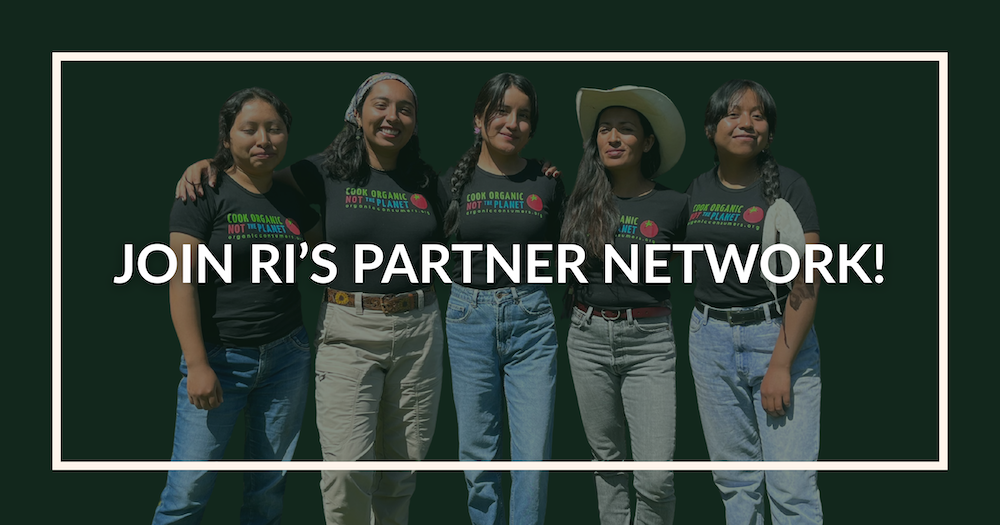
Dear Regeneration International Partners,
Our Regeneration International network has grown to over 800 partner organizations worldwide, a milestone we couldn’t have reached without your engagement and commitment. Together we’re building a global grassroots movement for regenerative food, farming, and land stewardship rooted in shared knowledge, local leadership, and collective action.
We Want to Hear from You
We plan to share more of your work and opportunities with the wider community this year. If your organization is offering classes, workshops, training, or events (online or in person), or has stories, videos, or updates to share, please send them to [email protected] so we can help amplify them in our partner updates.
Not a partner yet?
To learn more about partnership benefits, and how to apply, visit our updated “Join Us” page.
To explore the full partner community, see our network directory.
Thank you for being part of this global regenerative community.
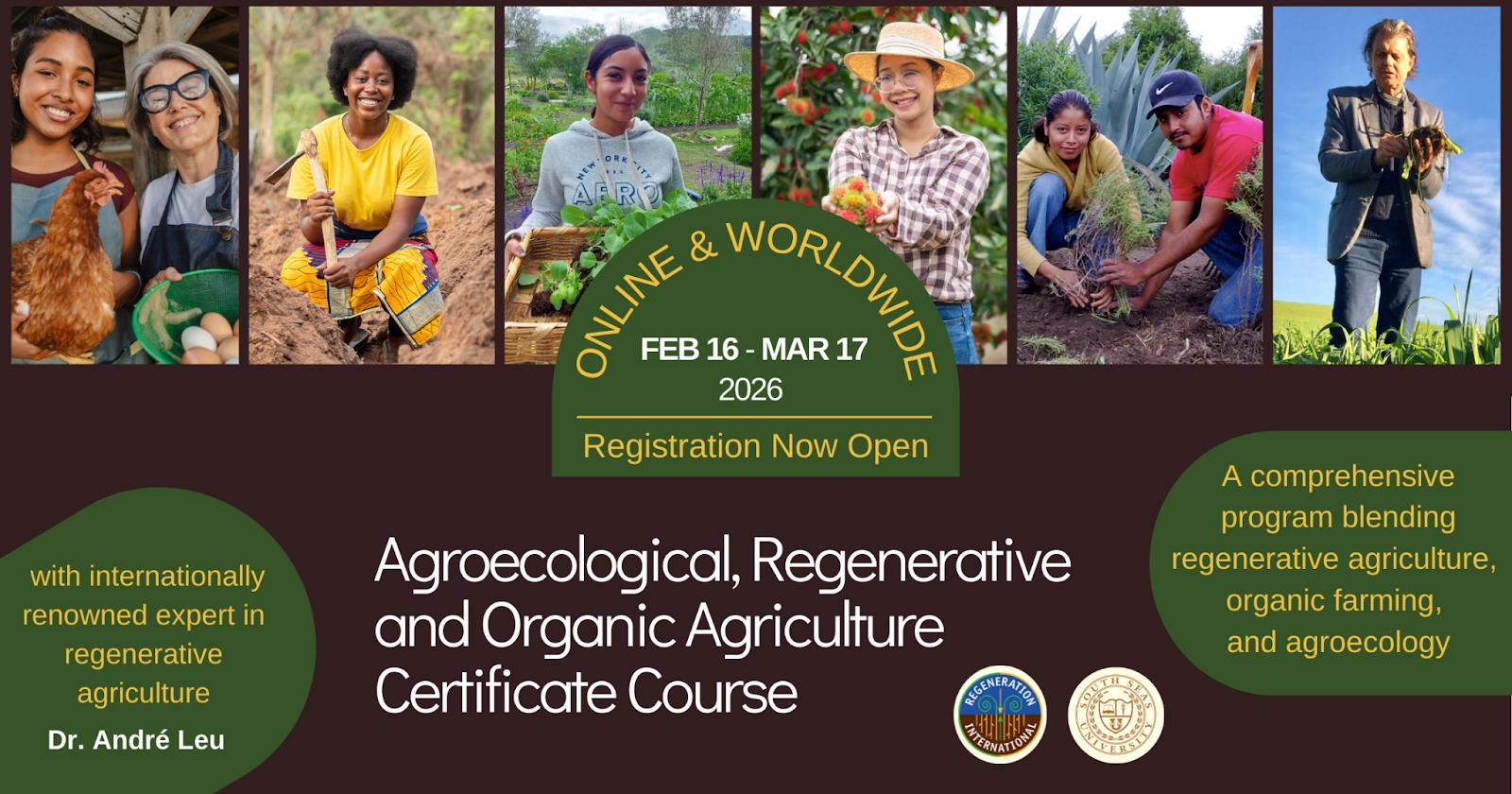
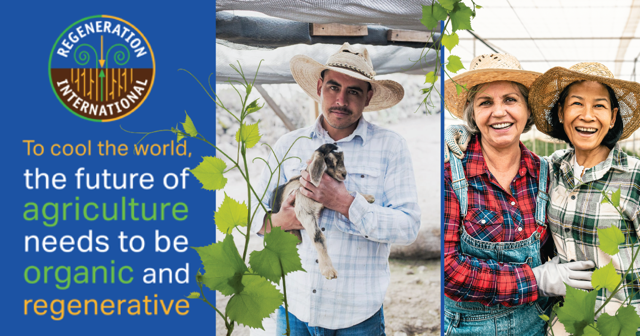
The Regeneration International Academy in Partnership with the South Seas University, announces the Certificate Course on Agroecological, Regenerative and Organic Agriculture (AROA)
We are excited to announce that another Certificate Course on Agroecological, Regenerative, and Organic Agriculture is starting soon.
Discover how to grow food in ways that restore ecosystems, build healthier soil, and support long-term resilience.
Regeneration International’s certificate course, offered in conjunction with South Seas University and taught by André Leu, blends regenerative agriculture, organic farming, and agroecology into a practical, science-based program that empowers you to design productive, climate-resilient farming systems.
Whether you’re a grower, student, or sustainability advocate, this course provides the tools, global perspective, and credibility to make real impact. Join a worldwide network of practitioners and learn how to shift agriculture from extractive to regenerative, creating healthier farms, communities, and landscapes.
You’ll leave the course with practical strategies you can apply immediately, whether you’re improving an existing farm, launching a new project, or contributing to policy and community initiatives. Grounded in essential regenerative principles, the program strengthens your confidence and skills to advance meaningful change in food and farming systems. More than a training, this certificate connects you to a global movement and equips you with the science-based tools and knowledge you’ve been seeking.
A reduced price is available for anyone with limited income who wants to participate. Please join us!
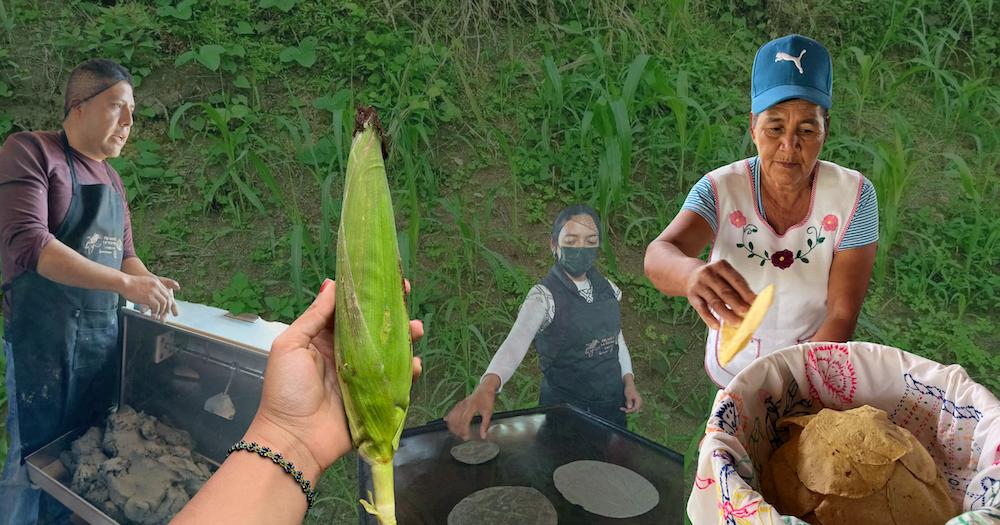
Boycott of the General Law on Adequate and Sustainable Food (LGAAS) due to Corporate Interests
by Mercedes López Martínez
Government interests, linked to transnational food corporations such as Coca-Cola, have halted the publication and approval of the regulations for the LGAAS, which should have been published in October 2025. As a result, the Mexican government is in breach of its obligations and is preventing the exercise of human rights related to “the consumption of nutritious, sufficient, quality, safe, and culturally appropriate food; the strengthening of self-sufficiency, sovereignty, and food security; the foundations for social participation; and the creation of sustainable food environments and the promotion of breastfeeding” (Decree issuing the LGAAS, April 2024).
From civil society, various groups such as Vía Orgánica have participated in the drafting and implementation of this law. Despite the fact that its regulations were agreed upon with the previous Mexican administration, their publication has been blocked by members of the current government from the Ministries of Health and of Agriculture and Rural Development (SADER). This has been done to prevent the enforcement of labeling for foods and beverages derived from genetically modified organisms; to inhibit the participation of civil society members free from corporate interests who have been involved in shaping the law for years, through the obstruction of the National Intersectoral System for Health, Food, Environment, and Competitiveness (SINSAMAC); and to favor purely commercial interests of transnational corporations that have created a global pandemic of obesity and malnutrition with their industrial products and beverages, in addition to generating massive plastic pollution.
Learn More
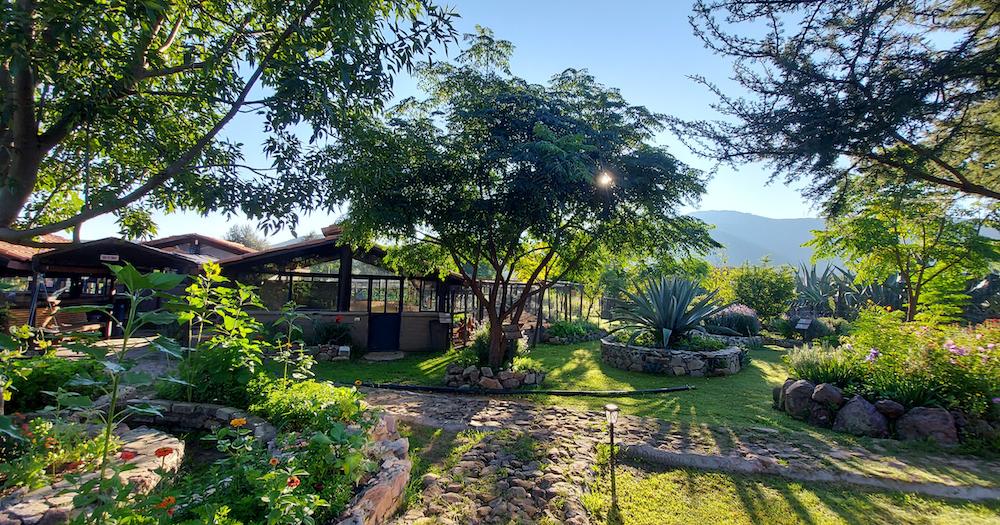
Agroecology Case Studies from Around the World
by Pesticide Action Agroecology Network
“PAN International’s Agroecology Workgroup recently published a series of case studies spotlighting agroecology in action around the world. Agroecology provides a robust set of solutions to the ecological, environmental, social, and economic pressures we face when it comes to growing food.
These case studies illustrate the validity of agroecology as a climate-resilient solution. Agrichemical corporations spend millions of dollars trying to convince us that the Indigenous wisdom that lays the foundation for the principles of agroecology is unrealistic for modern agriculture. But the truth is, farmers around the world are already using these methods to successfully transition away from the toxic pesticides and fertilizers that pollute soil and water and endanger farmworkers and communities.”
Learn More
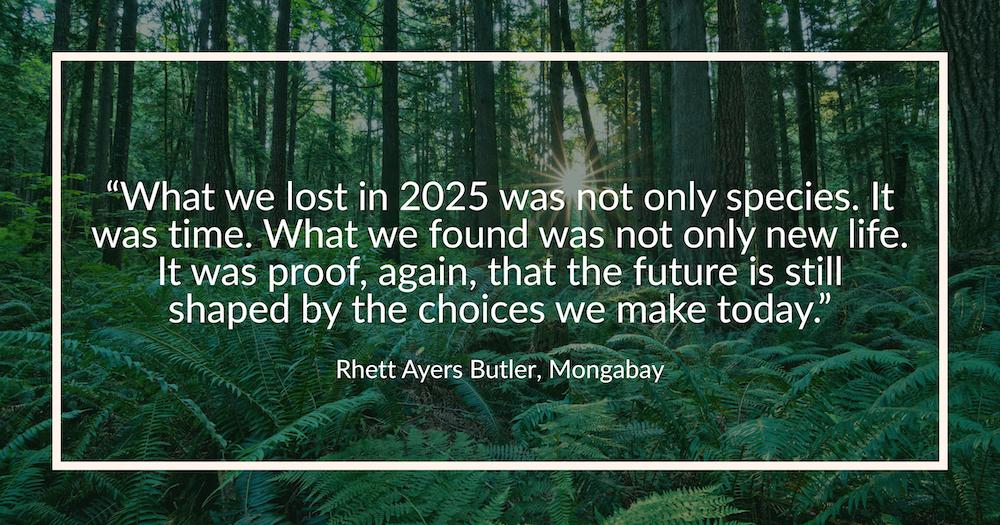
The Conservation Ledger: What We Lost and What We Gained in 2025
by Rhett Ayers Butler
“Extinction is rarely a moment. It is a process that unfolds offstage, marked by missed sightings, thinning records, and the slow reassignment of hope to footnotes. Discovery, too, is rarely a moment. It is a process of comparison, argument, and waiting—years spent persuading other experts that what you are seeing is, in fact, new.
A year-end review of nature tends to move between those two tempos. One is the closing of accounts. The other is the opening of drawers.
In 2025, a small group of species crossed a final bureaucratic threshold and were formally listed as extinct on the IUCN Red List. For science, the change was technical. For everyone else, it read like a set of obituaries that had been delayed for decades. At the same time, hundreds of organisms were described for the first time in the scientific literature—some collected in recent fieldwork, others hiding in plain sight in museum collections, misfiled by earlier assumptions.”
Learn More
Changes to Global Food System Could Help Limit Global Temperature Rise
by Sustainability Online
“A ‘decisive transformation’ of the food sector could contribute to limiting global warming, a new study led by the Potsdam Institute for Climate Impact Research (PIK) has found.
According to the study, which was published in the Nature Food journal, changes to the food sector could help to limit the global temperature increase to 1.85°C above pre-industrial levels by 2050, while also making food ‘healthier and cheaper’, and agriculture more aligned with biodiversity conservation.
The study is based on three possible pathways – the standard ‘SSP2’ scenario commonly used to model the continuation of current trends; a scenario of rapid transformation in the food system; and an expanded scenario with greater sustainability in other economic sectors as well.
Using PIK’s MAgPIE agri-food system model, the researchers assessed the impact of all three scenarios on greenhouse gas emissions, health risks, environmental pressures, income distribution and economic output.”
Learn More

Farmers Are About to Pay a Lot More for Health Insurance
by Sarah Boden, Drew Hawkins
“It’s been a tough year for farmers. Between falling prices for commodity crops like corn and soybeans, rising input costs for supplies like fertilizer and seeds, the Trump tariffs and the dismantling of USAID, many in agriculture won’t be profitable this year.
The enhanced subsidies that many Americans, including farmers, rely on to purchase health insurance are set to expire at the end of this month.
James Davis, 55, who grows cotton, soybeans and corn in north Louisiana, said he doesn’t know how he and his wife will afford coverage next year, when their insurance premium will quadruple, jumping to about $2,700 a month.
‘You can’t afford it. Bottom line, there’s nothing to discuss. You can’t afford it without the subsidies,’ Davis said.
More than a quarter of the agricultural workforce purchases health insurance through the individual marketplace, according to an analysis from KFF, a nonprofit health policy research organization.”
Learn More
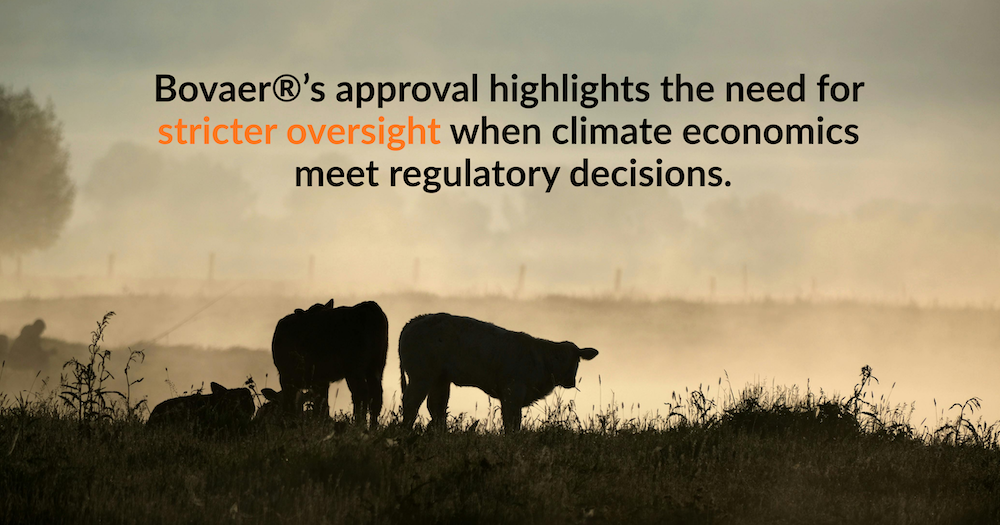
Bovaer® (3-Nitrooxypropanol): Regulatory Failure and Incomplete Scientific Understanding
by Don Want, PhD
“The approval of Bovaer® (3-nitrooxypropanol) as a methane-reducing cattle feed additive underscores a troubling failure of regulatory oversight despite incomplete scientific understanding. This analysis explores significant gaps in our knowledge of rumen microbiome complexity, the critical flaw of diet-dependent efficacy that regulators overlooked, the simplified approach used in studies of Bovaer®, and the shortcomings of safety testing protocols.
The natural methane cycle indicates that cattle emissions constitute a small fraction of the global methane flux relative to natural sources such as wetlands and permafrost. Yet regulatory bodies target cattle as a primary source of emissions without addressing systemic issues in industrial farming. Notably, research indicates Bovaer®’s effectiveness drops with higher fibre intake, ranging from 40-50% in low-fibre systems to only 7% in high-fibre grazing systems—a 500-700% variation that regulators ignored when approving its broad use across all production types. The 2025 Danish crisis, where Bovaer® was introduced under a government methane-reduction mandate and was followed by widespread reports of cattle health issues from over 350 farms—mostly pasture-based with high-fibre diets—demonstrates the real-world consequences of approving interventions without thorough testing across different dietary conditions.”
Learn More
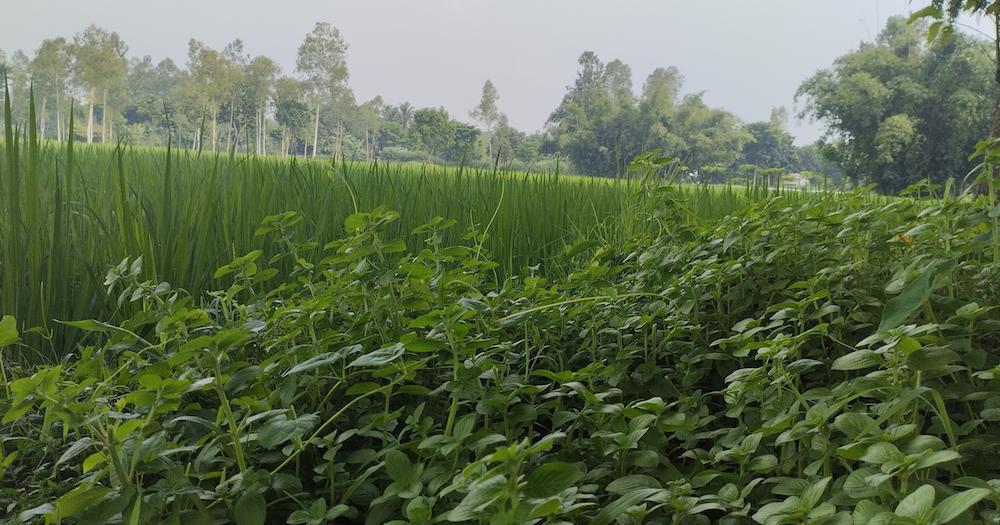
Restoring the Soil: How to Use Green Manure/Cover Crops to Fertilize the Soil and Overcome Droughts
by Michael Pilarski
“Learn how nitrogen-fixing ground covers and native, multi-purpose trees can restore the climate and feed the people in this latest book review.
Roland Bunch has done a real big favor to the small-scale farmers of The South and to the whole world by writing the 2nd edition of his book Restoring the Soil. I just finished reading his book and am very impressed by Bunch’s grasp of the topic and its’ far-reaching implications. I suspect he is the world’s leading expert on this topic for the tropics and subtropics. Roland outlines 117 different crop/legume combinations and rotations for lowland and highland tropics and for many different parts of Africa, Latin America and Asia.”
Learn More
|
|
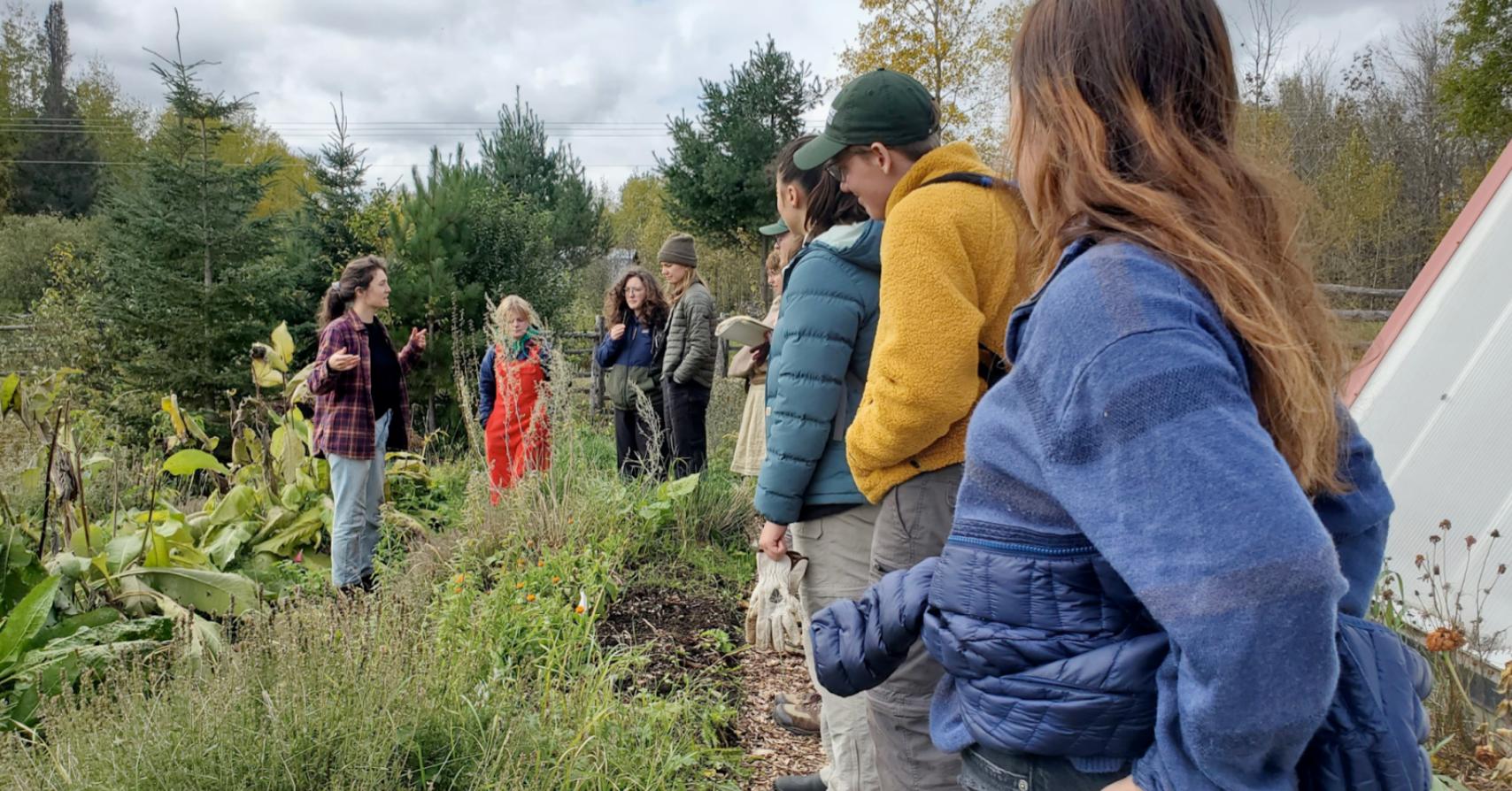
Nakuru County Passes an Agroecology Policy
Nakuro County has passed an agroecology policy in line with the national agroecology strategy for food systems transformation 2024 to 2033. The new law is expected to empower small holder farmers in the county to incorporate forestry and farming while reducing the use of chemicals in food production as a way to adapt to climate change.
Nearly Every Corn Seed Planted in Colorado Is Covered in Insecticide: Lawmakers May Restrict the Chemical
Colorado farmers plant tens of millions of corn seeds every year, nearly every one of them covered in a thin layer of insecticide.
A Study Is Retracted, Renewing Concerns About the Weedkiller Roundup
In 2000, a landmark study claimed to set the record straight on glyphosate, a contentious weedkiller used on hundreds of millions of acres of farmland. The paper found that the chemical, the active ingredient in Roundup, wasn’t a human health risk despite evidence of a cancer link.
Stingless Bees From the Amazon Granted Legal Rights in World First
Planet’s oldest bee species and primary pollinators were under threat from deforestation and competition from ‘killer bees’.
Stop GMO Garden Seeds
A new threat to organic farmers and seed savers is looming: Genetically engineered (genetically modified or GM) fruit and vegetable seeds could soon be marketed to small growers and home gardeners in Canada.
Our Biggest Food Justice Stories of 2025
This year, we doubled our reporting on the systemic obstacles to food security, including poverty, inequality, and structural racism.
The Overlooked Benefits of Real Christmas Trees
The environmental pros and cons of Christmas trees go far beyond the climate impact of "real or plastic", scientists say. So what's the best choice for a green Christmas?
Analysis of USDA’s Regenerative Agriculture Initiative (RAI)
In December 2025, USDA announced the Regenerative Agriculture Initiative (RAI), positioning it as a significant new investment in regenerative agriculture at a moment of major transition for federal conservation funding. The RAI is not a new program but instead a repackaging of existing USDA conservation programs, EQIP and CSP. Nor does it designate new funding towards either of these programs and the practices they target.
Only One Country in the World Produces All the Food It Needs. Here’s Why
While hundreds of millions around the world face food insecurity, a tiny South American nation has managed to become the only country that can entirely feed itself. How did Guyana manage it?
New Scorecard Warns: U.S. Food Retailers Lag on Reducing Harmful Pesticides
While leaders are making strides, many maor retailers still lag on reducing hazardous pesticides—despite rising consumer demand for safer food and mounting risks to pollinators, soil health, and food production.
Kiss the Ground’s Latest Mini-Documentary
Stories of Regeneration: Retired Dairy Cows explores a radical yet deeply traditional idea: that dairy cows, after their years of providing milk, can also provide some of the most flavorful, ecologically responsible beef on earth. Once the foundation of farming before the industrial boom of corn-fed cattle, this dual-purpose approach is being rediscovered by small farmers, visionary chefs, and soil stewards alike. Against the backdrop of a broken food system, the film reveals how regenerative grazing, farmer livelihoods, and unexpected flavor come together in one hopeful solution: the retired dairy cow could help heal us, the land, and farmers’ livelihoods.
|
Upcoming Events |

In Person:
01/26 - Building a Shared Vision for Sustainable Rangelands and Pastoral Communities in the Near East and North Africa — Tunisia01/30 - OAK Annual Conference — USA
02/05 - Rootstock – Devon’s Future Farming Conference — England
02/10 - BIOFACH – World´s Leading Trade Fair for Organic Food — Germany
02/13 - 2026 OEFFA Conference — USA
02/20 - California Organic Center Monthly Tours
02/26 - Marbleseed's Annual Organic Farming Conference — USA
Online:
01/26 - Webinar – Congreso Iberoamericano de Agricultura y Ganadería Regenerativa
01/28 - Webinar - Rodale Institute Midwest Virtual Coffee Hour
02/16 - Webinar – Certificate Course on Agroecological, Regenerative & Organic Agriculture (AROA)
*Click here to view full events calendar and submit your own
|
|
|


Regeneration International is an independent 501(c)(3) nonprofit, dedicated to building a global network of farmers, scientists, businesses, activists, educators, journalists, policymakers and consumers who will promote and put into practice regenerative agriculture and land-use practices that: provide abundant, nutritious food; revitalize local economies; regenerate soil fertility and water-retention capacity; nurture biodiversity; and restore climate stability by reducing agricultural greenhouse gas emissions while at the same time drawing down excess atmospheric carbon and sequestering it in the soil.
This email was sent to
Click Here to Unsubscribe