Updates in building coastal resilience up and down the East Coast

>

Friend of Wildlife,

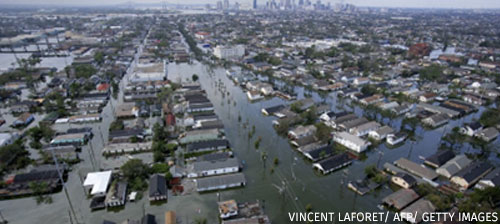
During 2025, rollbacks of funding, coupled with the accelerated number and severity of life-changing climate disasters such as storms and flooding, are leaving coastal communities and critical habitats wholly devastated.

Adaptation and mitigation are as important as ever, but the resources to advance resilience are changing.

The National Wildlife Federation remains committed to working with local, state, and federal partners to build community capacity and implement innovative solutions to respond to climate hazards that protect wildlife, people, and the planet.

As a nonpartisan organization, NWF serves as a connector for those focused on habitat restoration, climate solutions, and resilient communities. NWF’s coastal resilience team is continuing its work across the Northeast and Mid Atlantic and is excited to increase impact by building new partnerships and replicating successful, nature based solutions in Pennsylvania, Delaware, North Carolina, and South Carolina.

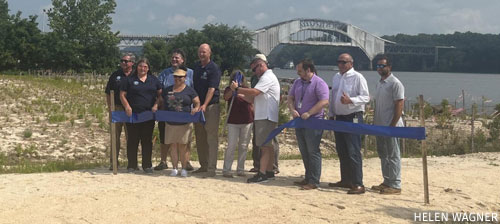
In this issue, we are excited to take a deep dive into adaptive management, share more about community relocation, and highlight the ribbon cutting of an innovative living shoreline project in Havre de Grace, Maryland.

We thank you for continuing to support our commitment to coastal resilience, and welcome your questions, thoughts or wonders.

From Pre-Construction to Post-Construction: a Commentary on Adaptive Management

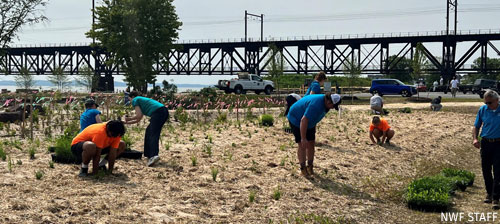
National Wildlife Federation’s Mid-Atlantic and Northeast region supports and promotes restoration through the implementation of natural and nature-based solutions (NBS). These restoration techniques focus on using native vegetation to replicate and bolster naturally occurring conditions to respond to climate impacts such as erosion and increased flooding. Nature-based solutions can be used as an alternative approach to using “gray infrastructure” such as seawalls and bulkheads.

IN THE NEWS: Where the Susquehanna Meets the Bay: Havre de Grace Protected by New Shoreline

At the mouth of the Susquehanna River, the largest tributary of the Chesapeake Bay, water laps against the pebbles, logs, and verdant grasses of a newly restored shoreline. Once a dilapidated bulkhead, this waterfront landscape in the heart of Havre De Grace, Maryland, is now a thriving ecosystem that benefits both its community and the Bay.

Where the Water Moves Us: Evaluating Community-Driven Relocation

With our nation’s coastal communities increasingly impacted by more frequent and sustained flood events, coastal storms, and other climate-accelerated impacts, many communities are having to confront the future viability of their security. In some cases that means facing the very difficult and stark reality that remaining in place is untenable, and community-driven relocation may be the most sensible option.